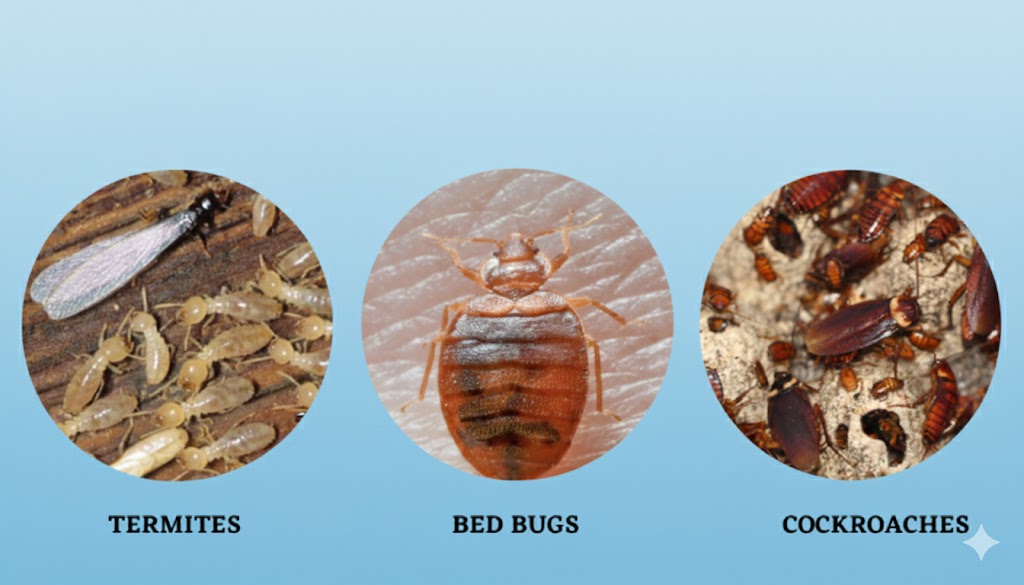
When it comes to pest problems, some invaders are easy to eliminate while others feel almost impossible to remove completely. If you live in Columbus, you already know that certain pests take over your home fast, hide in impossible places, and come back even after repeated DIY attempts. So what is the hardest pest to get rid of? The honest answer is that there is no single winner because several pests are extremely tough to eliminate. However, bed bugs, cockroaches, termites, and rodents are the top contenders.
These pests have one thing in common. They adapt, survive, and reproduce in ways that make them some of the most challenging pests to control in Columbus homes. In this blog, we will break down why each of these pests is so difficult to remove, what makes them different from other pests, and what you can realistically do to protect your home.
Bed Bugs
The Most Difficult Household Pest to Eliminate
Bed bugs are widely considered the hardest pest to get rid of in apartments, homes, hotels, and rental properties. They are tiny, fast to spread, extremely good at hiding, and resistant to many treatments.
Why bed bugs are so difficult to remove
They hide in tiny cracks:
Bed bugs squeeze into mattress seams, behind outlets, under carpets, inside bed frames, and even behind loose paint. They stay hidden during the day, which makes locating the infestation difficult.
They survive long periods without food:
A bed bug can survive for months without feeding. This means even after treatment, any bed bug that escapes can stay alive long enough to restart an infestation.
They reproduce quickly:
One female bed bug can lay hundreds of eggs in her lifetime. These eggs easily spread to nearby rooms or apartments.
They are insecticide-resistant:
Many common sprays no longer work on bed bugs. This is one of the main reasons DIY treatments fail.
In Columbus, bed bug problems are especially common in apartment buildings, rental homes, dorms, and places with shared walls. Because they move from unit to unit, professional help is almost always required.
Cockroaches
The Ultimate Survivor Pest
After bed bugs, cockroaches are next on the list of hardest pests to eliminate. These pests do not just survive. They thrive. They multiply fast, hide well, and are incredibly tough insects.
Why cockroaches are so hard to get rid of
They can live in the smallest spaces:
Cockroaches hide behind appliances, under sinks, inside cabinets, drains, and wall voids. They come out mostly at night, so an infestation can grow long before you notice it.
Rapid reproduction:
Roaches reproduce at a shocking rate. One female German cockroach, the most common species in Columbus kitchens, can create hundreds of new roaches in a short time.
Strong resistance to treatments:
Many roach populations have become resistant to common insecticides. Store-bought sprays often push roaches deeper into hiding rather than eliminating them.
They survive on almost anything:
Roaches can live for weeks with almost no food. They are attracted to garbage, crumbs, grease, moisture, and clutter. This makes kitchens and bathrooms easy targets.
Columbus homes, restaurants, and multi-unit buildings deal with roach infestations year-round because these pests can survive almost any condition.
Termites
Silent Destroyers That Work Behind the Scenes
Termites are not just pests. They are destructive insects that can quietly damage your home for years before you notice any signs. They feed on wood and can compromise the structure of your house without being seen.
Why are termites tough to eliminate
They work in hidden areas:
Termites live underground or deep inside wooden structures. You may not see them until the damage becomes serious.
Signs are often ignored:
Mud tubes, hollow-sounding wood, and small piles of wings are easy to overlook. Many Columbus homeowners discover termites only after structural damage has occurred.
Treatment is complex:
Termite control usually requires a combination of bait systems, soil treatments, and moisture control. Simple sprays or DIY tricks do not work.
Large colonies:
A single termite colony can contain hundreds of thousands of termites. With multiple queens and satellite colonies, eliminating them is not easy.
Because Columbus has high humidity and older homes, termites remain one of the most expensive and stubborn pests to remove.
Rodents
Intelligent Pests That Outsmart Many Homeowners
Mice and rats are extremely difficult to eliminate because they are smart, fast, and good at avoiding danger. They also reproduce at impressive speed.
Why rodents are hard to get rid of
They can squeeze through tiny openings:
A mouse can enter through a hole as small as a pencil. This makes it challenging to seal every possible entry point.
Fast breeding cycle:
Two mice can turn into dozens in just a few months. Once a rodent family settles in, the infestation gets large quickly.
They learn to avoid traps:
Rodents are intelligent. If they see other rodents caught in traps, they begin avoiding those areas.
They contaminate food and damage wiring:
Rodents chew through insulation, wiring, and plastic pipes. They also spread bacteria around your kitchen and pantry.
Columbus neighborhoods with older homes, basements, and nearby wooded areas often experience rodent problems, especially in colder months.
So Which Pest Is Truly the Hardest to Eliminate?
Each of these pests is difficult in its own way. Bed bugs are the hardest due to their hiding abilities and resistance to insecticides. Cockroaches are nearly impossible to eliminate without professional help because of their survival skills. Termites require specialized treatments that go beyond normal pest control. Rodents adapt fast and keep coming back if entry points remain open.
The truth is that DIY methods rarely work for any of these pests. Store-bought sprays, traps, and home remedies often make the problem worse by scattering the pests and allowing them to reproduce further.
The best approach is to bring in a professional pest control team that understands how these pests behave, where they hide, and what treatments actually work.
At Pest Control Columbus, we use safe, proven methods to remove difficult pests and prevent them from returning. If you are dealing with any of these stubborn invaders, the sooner you act, the easier it is to protect your home.
FAQs
1. What is the hardest pest to remove from a home?
Bed bugs are considered the hardest pest to eliminate because they hide well, reproduce fast, and resist many common treatments. Other difficult pests include roaches, termites, and rodents.
2. Why are bed bugs so difficult to kill?
Bed bugs hide deep in cracks, survive long periods without feeding, and have developed resistance to many insecticides. Their eggs are also tough to eliminate, which makes the infestation return if not treated professionally.
3. Are roaches harder to remove than ants?
Yes, roaches are much harder to eliminate. They reproduce quickly, adapt to treatments, and survive in harsh conditions. Ants are usually easier to treat compared to German cockroaches.
4. Can termites be removed with DIY treatments?
DIY methods are rarely effective for termites because they live inside walls or underground. Proper elimination requires professional bait systems, soil treatments, and moisture control.
5. Why do rodent infestations come back?
Rodents return when entry points are not sealed, and food sources remain available. They reproduce quickly and can learn to avoid traps, making long-term control difficult without expert help.