Few things are as frustrating as discovering bed bugs in your home. These tiny, reddish-brown insects are notorious for hiding in mattresses, furniture, and even small cracks in walls. They feed on human blood while you sleep, leaving itchy bites and restless nights behind. Once they move in, bed bugs can be difficult to eliminate without a clear plan. The good news is that with persistence and the right approach, you can regain control of your home and sleep peacefully again.
When searching for help, many people turn to local professionals by looking up services such as Pest Control Columbus. While some cases can be managed with do-it-yourself methods, severe infestations often require expert treatments. Knowing what works, what doesn’t, and when to call in professionals is the key to finally getting rid of these pests for good.
Understanding Bed Bugs
Before you can eliminate bed bugs, it helps to understand them. Bed bugs are small, about the size of an apple seed, and they flatten themselves to squeeze into tight spaces. They are active mainly at night, which is why many people wake up with itchy red welts on their arms, legs, or back.
They don’t fly, but they crawl quickly and can spread from one room to another. They often hitchhike into homes through luggage, secondhand furniture, or even on clothing. Because they reproduce quickly, a small problem can turn into a major infestation within weeks.
Signs of a Bed Bug Infestation
Identifying bed bugs early gives you a better chance of stopping them before they take over your home. Here are some common signs:
- Bite marks: Small, red, itchy welts often in clusters or lines on the skin.
- Blood stains: Tiny red marks on sheets or pillowcases from crushed bugs.
- Dark spots: Bed bug droppings, which look like tiny black dots on bedding or furniture.
- Shed skins: Bed bugs moult as they grow, leaving behind translucent shells.
- Live bugs: Spotting the actual insects, usually hiding in seams of mattresses, cracks in furniture, or behind baseboards.
Why Bed Bugs Are Hard to Eliminate
Unlike some pests, bed bugs are incredibly resilient. They can survive for months without feeding, and their flat bodies make them experts at hiding. Standard insect sprays often don’t reach their hiding places, and some populations have developed resistance to common chemicals. This is why bed bugs are considered one of the most difficult pests to control.
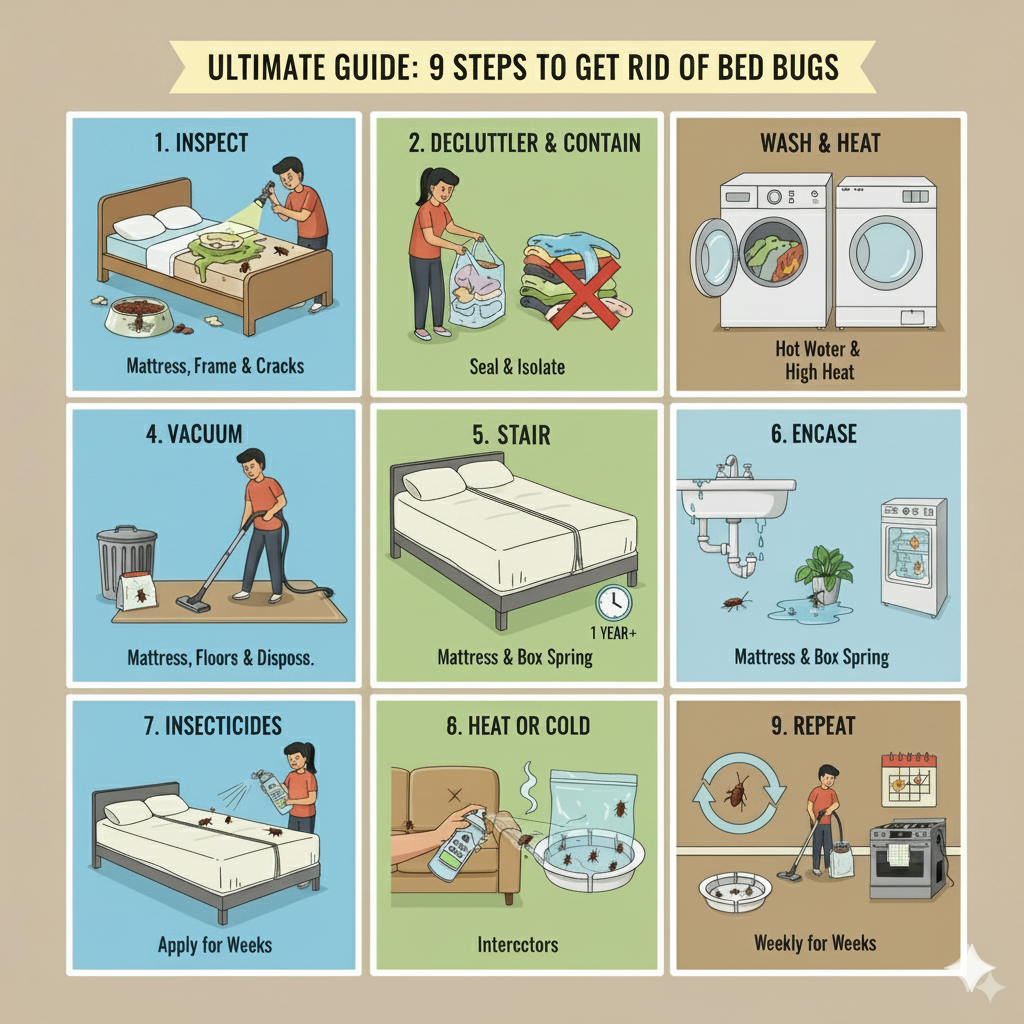
Step-by-Step Guide to Get Rid of Bed Bugs
1. Confirm the Infestation
Start by carefully inspecting your bed, box spring, mattress seams, and nearby furniture. Use a flashlight to check cracks, crevices, and baseboards. If you find evidence of bed bugs, act quickly.
2. Declutter and Contain the Problem
Remove clutter from around the bed and bedroom, as this gives bed bugs fewer places to hide. Place infested clothing, bedding, and linens in sealed plastic bags before moving them to avoid spreading bugs.
3. Wash and Heat-Treat Fabrics
Wash all bedding, clothing, and curtains in hot water and dry them on the highest heat setting. Heat kills bed bugs at all life stages. For items that cannot be washed, consider placing them in a dryer on high heat for at least 30 minutes.
4. Vacuum Thoroughly
Use a strong vacuum cleaner with a hose attachment to clean mattresses, bed frames, furniture, carpets, and baseboards. Immediately seal and dispose of the vacuum bag in an outdoor trash bin to prevent reinfestation.
5. Use Mattress and Box Spring Encasements
Bed bug-proof encasements trap any bugs inside and prevent new ones from hiding in your mattress or box spring. These encasements need to stay in place for at least a year, as bed bugs can survive for months without feeding.
6. Apply Heat or Cold
Bed bugs cannot withstand extreme temperatures. Steam cleaning mattresses and furniture with high heat is highly effective. Similarly, small items can be placed in sealed bags and stored in a freezer at 0°F (-18°C) for several days to kill the insects.
7. Use Approved Insecticides Carefully
There are insecticides labelled specifically for bed bug control, but they should be applied with caution. Sprays work best for cracks and crevices, but may not eliminate the entire population. Always follow product instructions and avoid overuse, as bed bugs can develop resistance.
8. Monitor with Bed Bug Traps
Bed bug interceptors placed under bed legs can help you monitor whether the infestation is ongoing. These traps capture bugs as they try to climb onto the bed.
9. Repeat the Process
Because bed bugs reproduce quickly, one treatment is rarely enough. Continue to clean, vacuum, wash, and monitor for several weeks until you’re sure the infestation is gone.
When to Call Professionals
For small, early infestations, DIY methods may work if applied consistently. However, professional exterminators have access to advanced tools such as heat treatments, which raise the temperature of an entire room or home to levels lethal for bed bugs.
Professional services also bring experience in identifying hidden infestations that are easy to overlook. If your infestation persists after several weeks of DIY efforts, or if you’re dealing with multiple rooms, calling a professional is the best solution.
Professional Bed Bug Treatments
Here are the most common methods pest control companies use:
- Heat Treatment: Heats the infested area to over 120°F, killing all bed bugs and eggs without chemicals.
- Chemical Treatment: Uses insecticides designed to penetrate cracks and kill bugs at different life stages.
- Combination Treatments: Many companies use a mix of methods to ensure effectiveness.
These treatments may seem costly, but they are often the only way to completely eliminate a large infestation.
Cost of Bed Bug Removal
The price of bed bug removal in Columbus and other cities depends on the severity of the infestation and the treatment method:
- Heat treatment: $800 to $1,500 for a single room, more for an entire house.
- Chemical treatment: $500 to $1,200, depending on the size of the property.
- Inspection fees: Some companies charge $100 to $200, though many waive this if you hire them.
While the cost may feel high, it’s often less expensive than repeated DIY attempts that fail to solve the problem.
Tips to Prevent Bed Bugs from Returning
Once you’ve eliminated bed bugs, prevention is critical. Here are some simple habits that help reduce the risk:
- Inspect secondhand furniture before bringing it inside.
- Use protective mattress and pillow encasements.
- Reduce clutter where bugs can hide.
- Be cautious when travelling by checking hotel mattresses and keeping luggage off the floor.
- Wash travel clothes immediately after returning home.
Final Thoughts
Getting rid of bed bugs is rarely easy, but it’s not impossible. By combining thorough cleaning, consistent monitoring, and proven treatment methods, you can take back your home. For severe cases, professional pest control companies offer heat and chemical treatments that provide lasting relief.
The key is to act quickly and stay persistent. Bed bugs won’t go away on their own, but with the right strategy, you can stop the infestation and prevent it from returning. A clean, comfortable, and bug-free home is worth the effort.