When homeowners think about pest prevention, they often focus on what happens inside the house. However, many pest problems actually begin outdoors. The way a property is landscaped can have a significant impact on whether pests are attracted to the area or stay away.
Trees, shrubs, mulch, standing water, and outdoor storage can all create ideal conditions for insects and rodents. While a well-maintained landscape can enhance a home’s appearance, certain landscaping habits may unintentionally provide food, shelter, and nesting opportunities for pests.
Understanding how your yard influences pest activity is one of the most effective ways to prevent infestations before they reach your home.
Overgrown Vegetation Creates Ideal Hiding Places
Dense shrubs, bushes, and ground cover provide excellent shelter for many pests. These areas offer protection from predators, shade from direct sunlight, and a safe environment for nesting.
When vegetation grows too close to the home’s exterior, it creates a direct pathway for pests to move indoors. Ants, spiders, rodents, and other insects often use overgrown plants as cover while searching for food and water.
Regular trimming helps reduce these hiding spots and makes your property less attractive to pests.
Tree Branches Can Act as Pest Highways
Many homeowners overlook the role trees play in pest infestations. Branches that touch roofs, gutters, or exterior walls can provide easy access to the home.
Rodents frequently use tree branches to reach attics and roof spaces. Ants and other insects can also travel along these natural bridges, bypassing many of the barriers designed to keep pests out.
Keeping branches trimmed away from the house can significantly reduce pest access points.
Mulch Can Attract Moisture-Loving Pests
Mulch is commonly used to improve soil quality and retain moisture in garden beds. While it offers many landscaping benefits, it can also create conditions that attract pests.
Because mulch retains moisture, it provides a favourable environment for:
- Ants
- Earwigs
- Cockroaches
- Beetles
- Termites
Applying excessive mulch near foundations can increase pest activity close to the home. Maintaining a small gap between mulch and exterior walls can help reduce this risk.
Firewood Storage Encourages Pest Activity
Firewood piles are another common landscaping feature that can attract pests. Stacked wood provides shelter, warmth, and protection for insects and rodents.
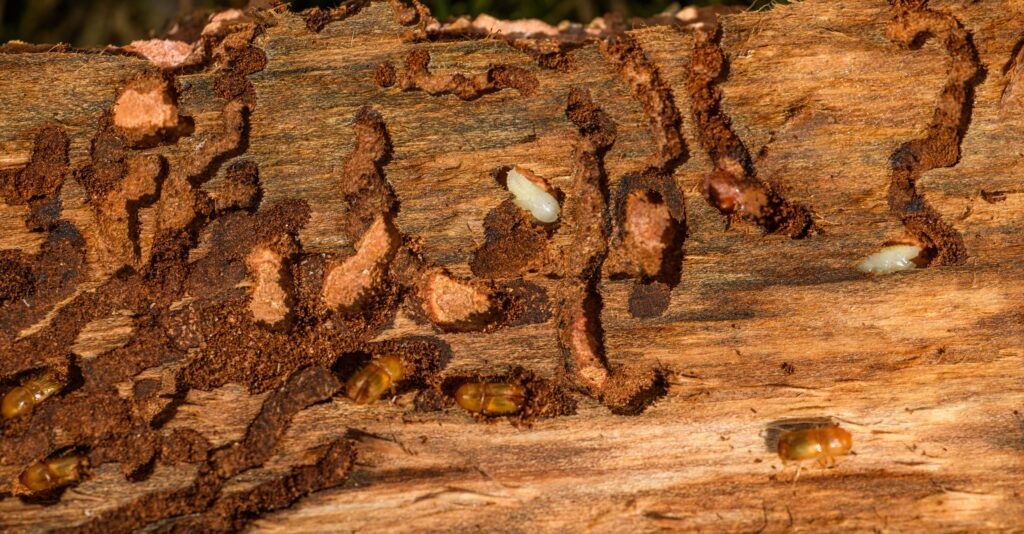
Many wood-damaging pests establish colonies inside firewood before eventually spreading to nearby structures.
For example, homeowners should understand how to identify and remove carpenter ants because these pests are often associated with damp or decaying wood and may move from outdoor nesting sites into the home.
To reduce risks, firewood should be stored off the ground and away from exterior walls.
Standing Water Attracts a Variety of Pests
Water is one of the most important resources for pest survival. Unfortunately, many landscaping features create opportunities for standing water to accumulate.
Common examples include:
- Bird baths
- Decorative ponds
- Clogged gutters
- Poor drainage areas
- Plant saucers
- Children’s outdoor toys
Standing water attracts mosquitoes and many other insects that thrive in damp environments.
Inspecting your yard regularly for water accumulation can greatly reduce pest activity around your property.
Outdoor Wood Structures Can Become Targets
Decks, fences, pergolas, gazebos, and other wooden features often become attractive nesting sites for pests.
Carpenter bees are particularly known for boring holes into exposed wood to create nesting tunnels. Over time, repeated activity can weaken structures and create additional opportunities for pest infestations.
Homeowners concerned about wood damage should learn how to get rid of carpenter bees before these pests cause extensive structural issues.
Routine inspection and maintenance of outdoor wood can help prevent long-term damage.
Fruit Trees and Gardens Can Increase Pest Pressure
Fruit trees, vegetable gardens, and flowering plants provide valuable food sources for many pests.
Fallen fruit, decaying produce, and organic debris can attract rodents, insects, and wildlife. If these food sources are left unmanaged, pest populations may increase significantly around the property.
Regular harvesting, cleanup, and proper garden maintenance can help reduce attraction.
Landscaping Problems Can Lead to Expensive Infestations
When landscaping continuously attracts pests, infestations can eventually spread indoors. Once pests gain access to a home, they may cause structural damage, contaminate food, and require extensive treatment.
Some infestations become particularly costly when they remain undetected for long periods. Understanding what pests are most expensive to remove can help homeowners appreciate the importance of early prevention and routine inspections.
Preventing pest activity outside is often much less expensive than dealing with an established infestation indoors.
Creating a Pest-Resistant Landscape
Fortunately, a few simple changes can make your property far less attractive to pests:
- Trim shrubs and vegetation regularly
- Keep tree branches away from the roof
- Avoid excessive mulch near foundations
- Eliminate standing water
- Store firewood away from structures
- Maintain outdoor wooden features
- Clean up fallen fruit and organic debris
- Improve yard drainage
These measures help create an environment that discourages pests while maintaining an attractive landscape.
Conclusion
Your landscaping choices can have a major impact on pest activity around your property. Overgrown vegetation, standing water, firewood storage, mulch, and outdoor wood structures can all attract pests and increase the likelihood of infestations.
By understanding these risks and making strategic improvements, homeowners can create a more pest-resistant environment and reduce the chances of pests finding their way indoors. Proper landscape maintenance remains one of the most effective forms of long-term pest prevention.